FRANCE

Have you ever dreamt of strolling through the charming streets of Paris, croissants in hand, with the Eiffel Tower shimmering in the distance? Or maybe you envision yourself nestled in a cosy café in Lyon, sipping coffee and soaking up the vibrant culture. Well, studying in France can make these dreams a reality! 
To study in France, Indian students need to follow the "Etudes en France" procedure, apply to universities through Campus France, and obtain a French student visa. The "Etudes en France" (EEF) procedure is mandatory for Indian students who plan to stay for studies longer than 90 days at a university in France and serves as a unified platform for university applications and the initial steps of the visa process. However, students can also choose to apply with any Campus France office located in their country.
To study in France, you need academic transcripts, a motivation letter, language proof (IELTS/TOEFL or French), financial proof, a passport and an acceptance letter from a French university. This comprehensive student guide on studying in France studying in France in 2026 for international students presents details like the living conditions, expenses, visa and university application process and more.
Also Read: Top 10 Benefits of Studying in France for Indian Students
Table of contents
- French Education System
- Popular Student Destinations in France
- Safety in France
- Weather in France
- Lifestyle Tips for France
- Indians Living in France
- Accommodation
- Orientation
- Activities
- Admission Timeline in France
- Admission Requirements in France 2026
- How to Study in France in 2026?
- Language Exams for France
- General Exams for France
- Cost of Studying in France
- Cost of Living in France
- Scholarships for Studying in France
- Loans for Studying in France
- Student Visa France
- Part time Work in France for Students
- Pre-departure Checklist Before Going to Study in France
- Enrolling at Your University in France
- French Grading System
- Homesickness
- Placements in France
- France Work Visa
View More
French Education System
France is a prominent member of the European Union and the Eurozone, as well as the United Nations Security Council, the Group of Seven (G7), NATO, the Organisation for Economic Cooperation and Development (OECD), and the World Trade Organisation. France also participates actively in international trade fairs (WTO). More than 250,000 foreign students select France as their country of study abroad. Given that some of the greatest intellectuals in history, like Descartes, Foucault, Voltaire, Jean-Paul Sartre, and Simone de Beauvoir, were born and raised in France, the country is well recognised across the world as the hub of the arts, philosophy, and culture. The basic, secondary, and higher education levels of the French educational system are all governed by the French Ministry of Education.
Public universities, like the renowned Sorbonne University, as well as specialised schools and the esteemed Grandes écoles, are available for study in France. A few examples include Sciences Po Paris for political studies, HEC Paris for Economics, Polytechnique, and the École des Hautes études en sciences Sociales for social studies.
France has around 82 state universities, five Catholic universities, and many private institutes, some of which award degrees and diplomas. Universities award three types of degrees - Licence (UG), Master's (PG), and Doctorate (Ph.D.).
Grande Ecoles are the ticket to success in France and all the top-level French politicians or business leaders are products of one of these schools. These are comparable to American Ivy League universities. In order to attend an undergraduate program in France, you must complete 12 years of schooling, as well as meet additional requirements. The academic year in France runs from September until June the following year. Some institutions or courses may have enrollments throughout the year as well. Check out all the exams required to study in France.
Popular Student Destinations in France
The top universities in France are Ecole Normale Supérieure, Ecole Polytechnique, HEC, INSEAD, Pierre-and-Marie-Curie, and Université Paris-Sorbonne University in no particular order. Paris is the centre of all the renowned academic institutes. Most of the best colleges in the country are situated in cities like Nice, Paris, Lyon, Grenoble, and Orleans. Approximately 4200 Indian students went to France in the academic year 2016-17. A majority of the students went to pursue a two-year degree, so, currently, around 6000 Indian students are pursuing their higher studies in France. Space and Aviation teaching, Engineering, Business Studies, Art, History, Tourism, and Hotel Management are the popular courses Indian students pursue in France.
 Which course are you planning to study in France?EngineeringMBA or Business ManagementFashion Design or Luxury Brand ManagementHotel ManagementComputer Science, Data Science or AI
 116 votes| Live1/4 polls
Safety in France
France is one of the safest metropolitan areas in Europe. Violent crime rates are fairly low, although some petty crimes like pickpocketing are not unheard of. If you are new in the country, never leave your bags or valuables unattended in the metro, bus, or other public areas. When travelling, it's always a good idea to have your country's embassy contact details on hand, should you run into any problems. In case of an emergency, dial 112.
SCHOLARSHIP PREDICTOR
Share your details and easily find scholarships that actually fit your profile


 Helped 12K+ studentsLet's start! It will just take 2 minsI want to do Masters
  I want to do Bachelors
Weather in France
France experiences mild temperatures throughout the year, which is neither too hot nor too cold, with regular rainfall. Each region in the country has its own particular climate - cooler to the north and west and warmer in the south. In winter there is plenty of snow. Summers are hot, with the sun shining across the country. The average temperature in winter is 8°C to 3°C. In summer, it is 15°C to 25°C.
Lifestyle Tips for France
France, sometimes referred to as the French Republic or République française, is a nation in Western Europe that has expanded into South America, French Guiana, and other islands in the Pacific, Indian, and Atlantic oceans. It's neighbors include the Netherlands, Belgium, Luxembourg, Germany, Switzerland, Monaco, Italy, and Andorra. Did you know that, because of its numerous overseas territories, France has the most time zones of any country (12 in total)? France ranks as the third most innovative country in the world. It is also amongst the top three study destinations for international students. In 2026, Paris is placed at =7 position in the top 10 student cities in the world rankings by the QS.
Recently, Paris was named one of the top three cities in the world's best cities for students. The main reason behind this is the varied types of courses being offered and the highest teaching standards being followed by institutes in France. The quality of student life and the lifestyle is attractive and hence a lot of youth are now moving to France for their higher studies. The good quality of student life works in favor of French universities, which have taken numerous steps to improve the way young people are welcomed, supervised, and monitored during their stay.
For those who know how to enjoy fine cuisine, the French food culture is the pinnacle of gourmet bliss. One of the most well-known cuisines in the world, it uses top-notch ingredients, and each region of the nation has its own distinctive delicacies. For instance, Normandy creates recipes using dairy, cheese, and shellfish. On the other hand, the traditional Boeuf Bourguignon comes from Burgundy. Olive oil, olives, fresh produce, and herbs are all available in the lovely region of Provence in the south of France.
Imagine going to school and living in France, where you may have daily fresh baguettes, quiche, croissants, éclairs, brioche, profiteroles, mille feuille, and macarons. Don't forget the cheese, either! French people take great pride in making cheese.
Indians Living in France
There are nearly 65,000 Indian immigrants living in France currently. Paris, Marseille, Lyon, Toulouse, and Nice are the cities where most Indians reside.

Pursuing a French language course at French universities, check:
Accommodation
Firstly, you need to decide whether you want to live in university-managed accommodation, or with a private landlord. Choosing university-managed accommodation can also give you a catered or self-catered option. Catered accommodation offers the benefits of your meals being cooked for you and a degree of certainty with meal costs.
If you have an idea about what you prefer, the accommodation office at your university will be able to tell you what accommodation they have available, so that's the place to start. If you are thinking of renting from a private landlord or if your chosen university can't offer you anything in its own residential premises, the accommodation office should be able to provide you with a list of private properties and landlords in the area.
Wherever you choose to live, you should make sure that you know your contractual rights and responsibilities. In most cases, you will be asked to enter into a tenancy agreement, which you should read thoroughly before you sign.
Orientation
The college orientation week is mandatory for international students, so ensure that you arrive before it starts. This is the time when you will be introduced to the university and its services, as well as enroll in your classes. It is essential that you read your guidebook, which is provided by the college. The guide explains each part of the admission process.
Activities
Along with sports, colleges offer extra-curricular activities offering students a wide range of experiences. Music, drama, science, and literary societies are offered in all colleges, and there will be opportunities for outdoor education and other leisure activities. Visits to theatres and concerts, to places relevant to the courses of study such as art galleries and museums, religious centers or historical sites, scientific companies and projects are all part of college life.

Admission Timeline in France
Most of the colleges in France accept online applications. You will have to visit each college's website to apply. In most cases, you will have to make an account on the college website to provide your basic information, submit the scanned version of your documents, and pay application fees. You will be informed about the application process and stages through this account. Please refer to the website of the colleges of your choice to know the process of applying.
The main intake season at all French universities is September. So the deadlines would be from February till May across different universities and courses. A few universities offer admissions in March as well. The deadlines for this intake would be from November to January.
Admission Requirements in France 2026
Since the language of instruction at French universities and colleges is French, you are required to prove your command over the language. International students are required to appear for French language tests.
For each course, a minimum academic record of 70% and above in Standard XII will be required. Foundations and Diploma programs are available for students who have secured around 60%. The student should be at least 18 years of age before joining a degree program.
It is important to note that these numbers are just for reference purposes, the actual numbers may differ from university to university.
The following documents also need to be submitted:
- Attested copies of mark sheets of Standard X, XII, and the Bachelor's degree (if applicable)
- At least two academic reference letters from professors who have taught you most recently
- If you have work experience, then two letters of recommendation (LOR) from the employer/manager who knows you well and can comment on your professional abilities
- Statement of Purpose (SOP)
- Resume
- Photocopied score reports of language tests and GRE/GMAT (if applicable)
- Portfolio (in case of students applying for art and design courses or architecture programs)
- Others (Certificates/achievements at the state and national level and extracurricular activities)
- Proof of funds
- Health insurance
- A copy of your passport
- A couple of passport-size photographs; scanned
- Application fee: All colleges require that you pay an application fee while applying. The fee amount will differ depending on the college and course being applied to, so check with individual colleges about their application fee.
How to Study in France in 2026?
Given below are the common steps to apply for admission in France:
- Search for colleges and courses
- Contact schools and visit websites for information
- Narrow down your list of schools
- Take the entrance exams like French language tests, GMAT/GRE (IELTS/TOEFL/PTE if required)
- Write SOPs and ask for LORs
- Apply to the colleges that fit your interests. You can apply via the Etudes en France platform.
- Appear for video interviews with the colleges that shortlisted you
- If accepted, apply for a student visa
SOP: A Statement of Purpose (SOP) is your introduction to the college and admission officers. It is always written in the first person and describes the reason for applying to a particular college. It needs to highlight why you are a perfect fit for the college and why the college should accept you. The style of writing could differ from formal to casual, but it is important to remember that it should reflect your personality as well.
Essay: Essays are also required to be submitted by a prospective student. Essays are an important part of the university admissions process. Students may be required to write one or two essays, along with a few optional essays too. Common topics include career aspirations, strengths and weaknesses, skills, experiences, and reasons for considering a particular school.
LOR: A letter of recommendation (LOR) is a reference letter written by a third party describing the qualities, characteristics, and capabilities of the prospective student to recommend him to the college in terms of that individualâ??s ability to perform a particular task or function. The third party could be a professor, direct manager, etc.

Language Exams for France
TCF (Test de Connaissance du français - Test of knowledge of French) and Le TEF (Test dâ d'Évaluation de français - French assessment test) are the standardized language tests that are required to be taken for the purpose of getting admission to colleges in France. You can take both the TCF and Le TEF at a testing centre in India or France. For complete information on the exam registration process contact Alliances Francaise, as that is the official governing body for these exams in India.
Note: Students wishing to take an international degree program, which could be either Bachelor's, Master's, or PhD, may not have to take a French language test. The teaching language in these courses is usually English. To study a degree course in English, English language exams like TOEFL or IELTS may be required.
General Exams for France
GMAT - Since almost all MBA programs in France are in English, the language of teaching would be English with a bit of French thrown in. French B-schools like admitting multi-lingual candidates, so it will be a bonus if you know French as well. Because of the bilingual clause, GMAT is the standard exam for getting admitted into business schools. GMAT is used to measure the abilities of potential MBA aspirants to undertake higher education in the field of business or management. It measures the mathematical, English, and reasoning skills of the student.
GRE - Some universities do recommend or require a GRE score, although it is not a mandatory requirement while considering a Master's degree in France. You will come across many options without GRE requirements.
Repetition and Fee: You can give GMAT an unlimited number of times, subject to five times a year and a gap of 30 days between two tests. The cost of the GMAT (at centre) is $275, GMAT (at home) is $300 and the GRE is ₹ 22,550 INR.

Cost of Studying in France
The average tuition costs for attending a college in France will vary according to the school, the course, and the city in which the school is located. The level-wise cost of studying in at public universities in France for non-EU international students is given below. 👇
Cost of Studying at Public Universities in France for International Students Course Level Tuition Fees UG €2,895 per year PG €3,941 per year PhD €397
The cost of studying at private universities in France for the non-EU international students ranges from €6,000 to €18,000 per year. Even though the amount of financial assistance and scholarships is limited for international students, the cost of attending university in France is considerably lower compared to other countries. This helps make up for the lack of financial aid assistance available.
Cost of Living in France
The cost of living in France depends heavily on what part of France you will be living in along with how much you will socialise. Some of the basic elements for living as an international student in France are:
- Accommodation rent (on-campus or off-campus)
- Groceries and food
- Utilities like power, water, gas, internet
- Phone bills
- Text and reference books
- Airfare for traveling back to India
Other elements which may differ from person to person would be:
- Dining out
- Travel and vacation
- Car rental and car insurance
- Cable TV connection
On average, an international student needs approximately 616 Euros per month in France. Prices differ a lot in the big cities and small towns all across France.
Particulars
Cost
Meal, inexpensive cafe
12.75 €
Milk (one litre)
0.95 €
Meal for 2 People, Mid-range Restaurant
50.00 €
Water (1.5-liter bottle)
0.59 €
Apples (1kg)
2.33 €
Tomato (1kg)
2.38 €
Potato (1kg)
1.54 €
One-way Ticket (Local Transport)
1.60 €
Monthly Pass (Regular Price)
54.00 €
Internet (60 Mbps or More, Unlimited Data)
27.53 €
Basic expenses like Electricity, Heating, Cooling, Water, and Garbage for an apartment for one month
139.70 €
1 bedroom apartment in the city centre
655.68 €
1 bedroom apartment outside of the Centre
523.75 €
1 Movie ticket
10.00 €
Health Insurance
All international students in France are required to have mandatory health insurance, which could be either public or private. Many international students are eligible to take part in the universal health care coverage offered by the university, though this is dependent upon factors such as age, country of origin, and length of their degree program.
Scholarships for Studying in France
Fee waivers are awarded to international students on the criteria of merit and the need for it. Candidates with strong academics, good performance on standardized exams, and extracurricular achievements would be eligible for scholarship awards and financial assistance. To benefit from these opportunities, one has to make sure to send all the required documents by particular deadlines. In addition to this, the presentation of the application is also important because one is judged by the image one projects.
Some of the scholarships available with academic institutions in France can cover the partial or total expenses of attending college. Here are a few scholarships that students abroad can take advantage of:
- Charpak Scholarships
- The Michaela Farnum Memorial Scholarship by International Studies Abroad Inc. (ISA)
- Dr. Carlos E. Memorial Scholarship by International Studies Abroad Inc.
- Chateaubriand Fellowship by the University of Illinois
- IES Abroad Excellence in a Foreign Language Scholarship by Institute for the
- International Education of Students
- ISA Diversity Scholarship by International Studies Abroad Inc
- GSE Summer Scholarship by Global Student Experience
- GSE Language Development Scholarship by Global Student Experience
- GSE Academic Scholarship by Global Student Experience
- Boren Scholarships and fellowships by Boren Awards For International Study
- Arcadia University Gilman Scholarships
- Annette Kade Scholarships by International Student Exchange Program
Also Read: Graduation Day in Universities Abroad
Loans for Studying in France
Student Eligibility criteria: The first thing is to be aware of whether you are eligible to apply for the loan or not. The general eligibility criteria that are followed by all the banks are:
- You should be an Indian national
- You must have a strong academic record
- You must be seeking admission to professional, technical, or other courses
- Most banks maintain that the selected course should be job-oriented
- You must have secured admission to a foreign university/institution
- You must be above the age of 18 years, or else your parents can avail of the loan
Eligibility of course: You may not get a loan on every course. Here are the kinds of courses that qualify for the education loan.
- For Graduation: Job-oriented professional or technical courses offered by reputed universities
- For Post Graduation: MCA, MBA, MS, or even diplomas
- These courses could be from foreign universities or institutes approved by the state and central government
Loan amount: If your total fee is Rs 10 lakh, the bank may offer to give a loan of 80% of the amount and you will have to put in the balance of 20%. This is called the margin amount. The maximum loan amount for studies abroad is generally around Rs 20 lakh by the bank. If your tuition fee amount is Rs 30 lakh, you'll have to manage the rest of the funds by yourself. Some banks charge a processing fee, while others don't. It may be a fixed amount or a percentage of the total loan amount. So if the bank charges you one percent as a processing fee, that will be an additional cost you'll have to cover.
Documentation required: You will have to provide the acceptance letter sent by the university reflecting that you have been selected for the course and the schedule of fees. You will also need to show the mark sheet of the last qualifying examination to show your academic record.
All banks have different requirements for documentation, so you need to confirm with the bank first.
Repayment: Repayment starts only after the course period. If the student gets employed within one year after completion of the course, the repayment should start immediately after the expiry of one month from the date of employment.
If you do not secure a job within a year of completing the course, then repayment starts irrespective of whether or not you are employed. The loan is generally to be repaid in 5-7 years after the commencement of repayment. If the student is not able to complete the course within the scheduled time extension for completion of the course, he may be permitted for a maximum period of two years. Generally, you will get up to a maximum number of 10 years to repay the loan.
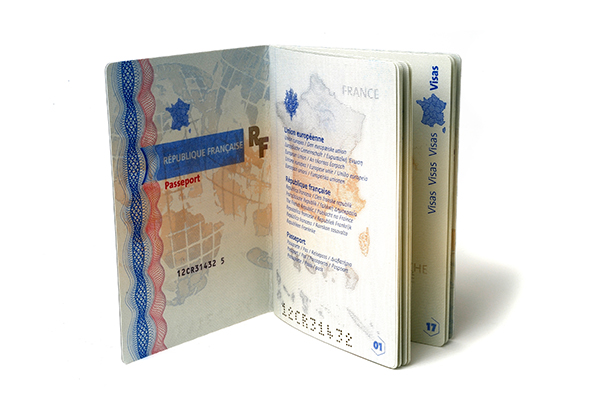
Student Visa France
Submission of a France student visa application and collection of passports can be done only by the applicant himself or through a travel agency authorized by the Embassy of France, New Delhi.
Before submitting your application for a student visa at the French Consulate you must create an online Campus France registration file. You may contact the closest CampusFrance office for assistance or schedule an appointment through the online file or by calling the CampusFrance office. (CampusFrance is a service of the French Embassy in India to promote higher education in France)
You need to visit the VFS website to schedule an appointment at the visa application centre to submit your application.
In addition, you should provide two sets of application photocopies containing the following documents:
- Long stay application form for a duration of more than 90 days
- Two passport-size photographs
- A copy of the Passport
- A printout of your CampusFrance ID number
- Letter of registration from the academic Institution
- Cover letter explaining the study project and a CV/Resume
- Proof of funds - tuition fees + a minimum of 615 Euros/month, for the complete academic term
- Proof of medical insurance with coverage valid in France
- Copy of your round-trip airline ticket (if you are studying for six months or less) or a one-way ticket (if you are studying in France for more than six months)
- OFII form (Office Francais de Immigration et de Integration)
- Proof of residency in France such as a lease, electricity bill, title of property, etc. for a minimum of three months or a Hotel reservation
Part time Work in France for Students
French law allows students to do 964 hours of part-time work in a given year. International students are also eligible for student jobs at universities. Students are hired to provide assistance to incoming students, help disabled students, tutoring, IT support and assistance, work in the career centre, etc.
Student employees are supposed to follow a work schedule that will not interfere with their studies. The terms and conditions of employment are adapted to the requirements of each student's program so as to ensure academic success while offering work experience.
Pre-departure Checklist Before Going to Study in France
- Book airline tickets
- Arrange accommodation in France
- Arrange transportation to/from the airport to home in France
- Arrange your banking - consider buying traveller's cheques
- Check baggage and customs limitations
- Clear all paperwork with your home educational institution
Get your documents in order and make photocopies to store in your baggage and keep at home, including:
- Passport
- Airline tickets
- Travel insurance certificate
- Letter of Acceptance by the educational institution
- Key addresses and phone numbers
- A bank statement showing proof of funds
- Prescriptions for any medication you are carrying
- Traveler's cheques - if applicable
- Medical and immunization records
- Academic history and university transcripts

Enrolling at Your University in France
Registration has two parts -
1. Administrative registration, in which you will enrol in the national student health plan and pay any balance due for your tuition. At the end of the process, you will receive your student ID card.
2. Academic registration, which is the second phase of the registration process. You will choose from the course options open to you, learn the dates and times of your classes, etc.
French Grading System
French grading system uses a scale from 0 to 20. The minimum passing grade is 10. Grades 14 and above are equivalent to an A scale on World Education Services (WES). When we talk about British master’s grades to French equivalent, we can note the following points:
- UK First-Class Honors (70% or above) are equivalent to 16+ on the French grading system.
- UK 2:1 (60%-70%) are equivalent to 14-15.9 on the French grading system.
- UK 2:2 (50%-60%) are equivalent to 12-13.9 on the French grading system.
- UK Third-Class Honours are equivalent to 10-11.9 on the French Grading System.
Homesickness
Homesickness is a predictable problem faced by most students at one point or another. It may occur at the beginning or even well into your year. Homesickness will pass. Be patient. Give it at least two weeks. If you are feeling sad, explain what is happening to your friends. Do not hide in your room; if you do, the feeling will only worsen. Find your counsellor staff with whom you can talk about homesickness or other problems. Homesickness might be made worse by frequent, long telephone calls home. Most homesick students feel more homesick after a call home than they did before they picked up the phone. Try to limit yourself to one call home every week. The sooner you integrate into the university experience, the sooner your homesickness will pass.
Learning Basic Cooking: Cooking for yourself will save you money. Indian food is expensive in France. It will also satisfy your urge to eat "your food" during moments of cultural shock. Indian spices are not commonly available in smaller cities, but there are often shops on campus where you can get ingredients used in most Indian food.
Travel: Each large city has and provides different methods of public transportation, such as buses, taxis or trains. You might wish to rely on a private car for transportation. Even with the rising cost of petrol, private cars are the most economical and convenient mode of transportation because you get a lot of flexibility and freedom with your car. You can travel wherever and whenever you want and don't have to depend on the schedule of public transport. However, before you buy your own car, you will have to use public transportation or ask friends for rides.
Placements in France
Indian students are used to the concept of campus placements and on-campus recruitment for getting jobs, where companies visit campuses and hire graduates. There is no concept of placements in France, like most other countries. Most French universities have a Career Services cell, which helps you get jobs and helps you prepare for interviews. They may refer you to companies or help you get in touch with HR managers. The job search is mostly self-driven in European countries, where it is considered your prerogative.
France Work Visa
Students who have earned at least a master’s degree or the equivalent may apply for a one-time non-renewable temporary residency authorisation called APS (authorisation provisoire de séjour). It is valid for 12 months. Under a new scheme called "second residence permit", this duration can be doubled to 24 months. Students who obtain a job related to their academic program may enter full-time employment by filing a request for a change of status (from student to employee) in their application. The cost of a French student visa for Indian students is €50, while the Campus France fee is INR 18,500.