USA

According to USCIS (US Citizenship and Immigration Services), 3,37,630 Indian students went to the USA for higher studies in 2024. The number of Indian students in the US increased by 40.81% in 2024. Since admissions were halted in 2025 internationally because of the latest social media rules for F1 student visas that were introduced, there are no concrete admission numbers for Indian students yet.
If you have decided to study in the US, your choice of destination country needs no validation as the US is aathe best study abroad destination. In this study guide to the USA for international students, we will inform you of everything you need to know for studying in the USA, from popular universities to lifestyle tips and accommodations to the admission process. Not to justify your choice but to strengthen your decision further, we have compiled a few reasons why considering the US as your study abroad destination is a wise decision.
Table of contents
- USA Country Highlights 2026
- Why Study in USA in 2026?
- USA Education System
- Top 10 Universities in the USA 2026
- Popular Student Cities in the USA - QS Rankings 2026
- Climatic Conditions in the US
- USA Lifestyle
- Accommodation in the USA
- How to Study in USA?
- How to Apply to US Universities from India?
- USA Application Timeline 2025
- Cost of Living in USA
- Cost of Studying in the USA
- Scholarships to Study in the US
- Education Loan to Study in the US
- What are the Visa types in the US?
- USA Part Time Work Rules for International Students
- USA Pre-Departure List for International Students
- After Arrival in the USA
- Post Study Work Permit in USA
View Less
USA Country Highlights 2026
International Students Studying in USA in 2024-25 1.72 million Total Universities in USA 4,000+ Admission Criteria
UG: High school certificate/mark sheets + SAT / ACT scores (not mandatory if optional) + ELP test scores of TOEFL / IELTS / Duolingo
PG: Bachelor's mark sheet + GRE / GMAT + ELP test scores + SOP + LOR + Resume
Types of Financial Aid in US Need-Based, Merit-Based and External Scholarships Average Scholarship Offered in 2024 in USA USD 82,398 Part-Time Working Hours 20 hours a week US F-1 Visa Fee USD 185 Procedure for Obtaining US Study Visa Obtain the I-20 Form upon acceptance at US university, pay the SEVIS fee, apply for a visa interview, attend the interview and obtain a study visa. Post Study Stay Back Period 1 year | 2 years (for STEM Courses Applicants) Average Pay Per Hour in USA USD 35.87 SCHOLARSHIP PREDICTOR
Share your details and easily find scholarships that actually fit your profile


 Helped 12K+ studentsLet's start! It will just take 2 minsI want to do Masters
  I want to do Bachelors
Why Study in USA in 2026?
Although the reasons for studying in a foreign country may differ widely among students, a few standout features make studying in the USA different from others. Below are a few of the reasons why going to the US to study might be a good decision for international students:
- Every year, the USA registers the maximum number of applications for admission and admits the highest number of international students.
- Around 1,500 US universities rank globally and have made a mark for being in the top 10 universities globally as per QS and THE World rankings annually.
- There are over 3,000 universities in the US from which to choose for higher education. Also, the US is home to reputed Ivy League schools.
- Along with the highest number of universities in the US, the course options are diverse, and many specialisations are offered.
- Home to some top MNCs, the USA is a popular choice for working after studying internationally.
- International students can work while studying in US universities and earn experience plus money to support their living costs.
Despite challenges and changes in policies, check out Why International Students are Still Choosing to Study in the USA in 2026? Want to know more reasons to choose the US as your study abroad destination?
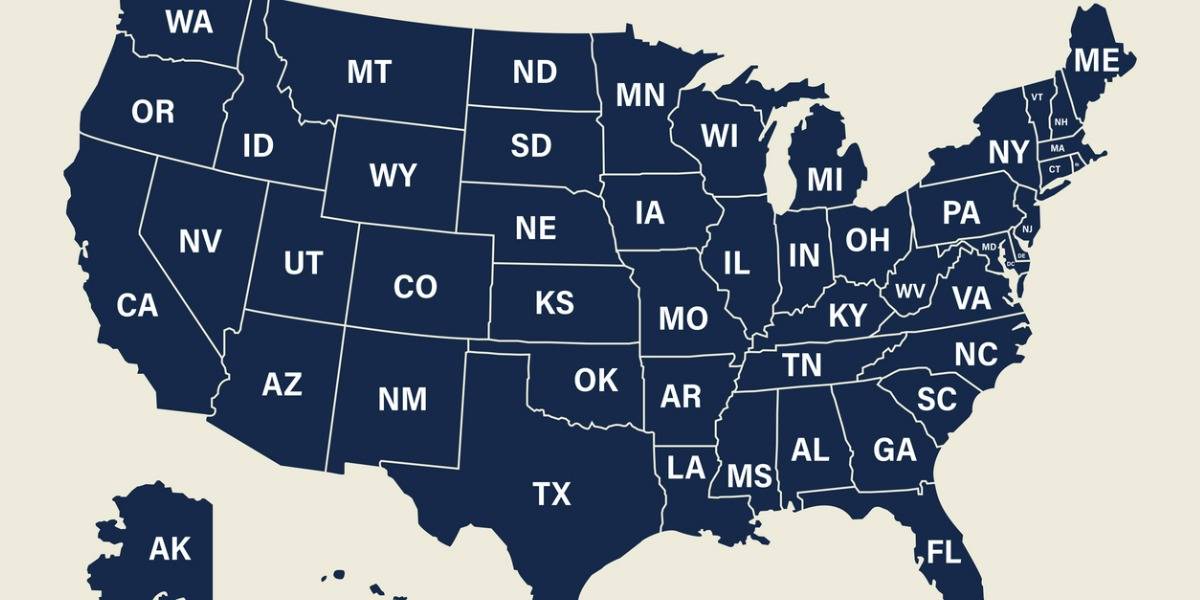
USA Education System
Many students pursuing their higher studies in the US must be surprised to know that the US has no education system. The federal government can influence education only through the funding it offers, but this is limited. Unlike CBSE board examinations in India, there is no national high school graduation examination. There are, however, state graduation examinations, and students must pass these. The US education system yet follows the below-given hierarchy of education:
Stage-Wise US Education System
- Elementary school
- Middle School
- High school
- Post-secondary (college) - level has various types of institutions in the US
Types of Colleges in USA
There are a couple of colleges in the USA which are different from the regular existing colleges in USA; some of these are as follows:
- State School/College/University: The US is comprised of 50 states, and each state has at least one university or college to provide quality higher education to students at low rates. These universities are funded by the respective state governments and are equipped with state-of-the-art facilities. Different public universities in USA have different selection criteria, and students need a certain minimum percentage of admission to colleges in the USA. Some of the biggest US university systems are as follows:
- California State University System
- University of California System
- University of Illinois System
- University of Texas System
- University of Wisconsin System
- University of Massachusetts System
- State University of New York System
- Private university/college: These institutions are run privately and are considered costly compared to state schools. Some of the popular private universities in USA include - Massachusetts Institute of Technology (MIT), Harvard, Stanford University and others. These private universities are also some of the hardest universities in the USA to get into since they record the lowest acceptance rates.
- Community Colleges: Community colleges offer two-year certification or associate degrees, which are transferable. Generally, Community college graduates transfer to universities or four-year colleges to complete their degrees. They can transfer the credits they earned at the community college. Community colleges offer ESL courses, associate degrees or other programs which prepare students for studying university-level courses.
- Technology Institutes: These institutes provide four-year courses related to science and technology.
- Liberal Arts College: Students pursuing a liberal arts degree focus on a subject of their choice, a 'major', but they are also required to take General Education courses in almost all other subjects offered. Liberal arts schools usually offer one expansive study area, whereas universities offer the same major in two or more degree areas. A student can major in mathematics but can still choose to pursue an engineering career.
There is a huge difference between the US and Indian education systems. Indians are usually the top recipients of high-skilled H-1B visas and the second-largest community of international students in the US. The US government records claim that immigrants from India are better educated, more likely to have strong English language skills, arrive on employment-based visas, and are less likely to live below the poverty line than the overall immigrant population.
Many Indians work in science, technology, engineering, and math (STEM). Most Indian immigrants stay in California, Texas, and New Jersey.
Top 10 Universities in the USA 2026
Some of the top universities in the US that are popular among international students are as follows:
US Universities QS - World University Rankings 2026 THE - World University Ranking 2026 Massachusetts Institute of Technology (MIT) #1 #2 Harvard University #4 #3 Stanford University #6 #6 California Institute of Technology (CalTech) #10 #7 University of Pennsylvania #11 #14 University of California, Berkeley #12 #8 Cornell University #16 #20 University of Chicago #21 #14
#22 #4 Yale University #23 #10
As per the QS rankings 2026, around four US universities ranked among the top 10 universities globally. And as per THE's 2026 rankings, six US universities reached the top 10. The top-ranking US universities also make it to the top 30 universities annually per both QS and THE global rankings.
National Rankings of Top 10 US Universities 2026
Apart from global rankings, there are also national rankings released by US News & World Report. As per this, these are the top 10 US universities that have been ranked for 2026:
- Princeton University
- MIT
- Harvard University
- Stanford University
- Yale University
- University of Chicago
- Duke University
- Johns Hopkins University
- Northwestern University
- University of Pennsylvania
Popular Student Cities in the USA - QS Rankings 2026
The area of New England on the east coast of the US is the centre of all its renowned academic institutes. Most of the top-ranking colleges in the USA are in the US cities of Cambridge, New York, Florida and other areas. Let us have a look at the 10 Best Student Cities in USA as per QS in 2026:
Best Student Cities in US QS - Best Student Cities Ranking 2026 Boston #16 New York #18 San Francisco #29 Los Angeles (LA) #37 Chicago #44 Philadelphia #65 San Diego #69 Washington DC #70 Atlanta #72 Pittsburgh #80
For more details check out: Best Student Cities in USA
Climatic Conditions in the US
Based on the region, the climatic conditions of each of the US regions have been given below:
- Southwest - The Southwest has a hot desert climate and covers cities like Phoenix, Las Vegas. The average temperature in summers would be around 40°C to 25°C; in winters it would be around 18°C to 4°C.
- Southeast - The southeast has a warm to hot, humid climate and covers cities like Houston, New Orleans, Atlanta, and Charleston. The average temperature in summers is around 35°C to 25°C; in winters it is around 10°C to 0°C.
- Midwest - The Midwest, Northern Plains, Great Lakes, and New England regions have a humid climate and cover cities like Wisconsin, Michigan, and Ohio. The average temperature in summers is around 28°C to 15°C; in winters it is around 0°C to -9°C.
- Atlantic Coast - The central plains and East Coast have a temperate humid climate and cover cities like St. Louis, Cincinnati, and NYC. The average temperature in summers is around 30°C to 18°C; in winters it is around 4°C to -3°C.
- Pacific Northwest - The Pacific Northwest has an oceanic climate and covers cities like Seattle, and Portland. The average temperature in summers is around 30°C to 18°C; in winters it is around 4°C to -3°C.
USA Lifestyle
The United States is a dynamic country covering the breadth of a continent. Many cultural currents exist and coexist within American life. To mingle with the local crowd, you need to keep in mind that the lifestyle of Americans is a lot different than Indians. You must include more activities to get to know and meet new people.
- Know about Professional Sports - One way to break the ice with the locals is to talk about professional sports like NFL, NBA, or other local sports. Sports play an important role in mingling with locals.
- Outdoor activities – Americans love participating in outdoor sports and games. Their lifestyles are more active, and they prefer meeting new people and trying out new and different skills.
- Music Concerts, Nightlife – Every weekend, people attend social events like concerts and performances, or go to a bar to watch a game. Weekends are for socialising and relaxing, so your friends or classmates might invite you to a club. All you need is an open mind to meet new people and socialise.
To learn more about the American lifestyle, you should explore the details of American culture.
Accommodation in the USA
Firstly, you must decide whether to live in university-managed accommodation or with a private landlord. Choosing a university-managed accommodation can also give you a catered or self-catered option. The catered accommodation offers the benefits of having your meals cooked for you and a degree of certainty with meal costs.
Suppose you have an idea about what you prefer. In that case, the accommodation office at your university will be able to tell you what accommodation they have available - so that’s where to start. If you are considering renting from a private landlord or if your chosen university can’t offer you anything in its residential facility, the accommodation office should be able to provide you with a list of private properties and landlords in the area.
Regardless of where you choose to live, it is essential to understand your contractual rights and responsibilities. In most cases, you will be asked to enter into a tenancy agreement, which you should read thoroughly before you sign. Also to understand what more student accommodation options in USA are available before travelling to US for studies.
Orientation After Arriving in the USA
Orientation week is mandatory for international students; therefore, ensure you arrive before it begins. This is the time when you will be introduced to the university and its services, as well as enrol in your classes. You must read your guidebook, which the college provides. The guide explains each part of the admission process.
Activities to Look Forward to in the USA
Along with sports, colleges offer a range of extracurricular activities that provide students with diverse experiences. Music, drama, science, and literary societies in colleges offer opportunities for outdoor education and other leisure activities. Visits to theatres, concerts, and places relevant to the courses of study, such as art galleries and museums, religious centres or historical sites, scientific companies, and projects, are all part of college life.
How to Study in USA?
To study in USA, international students will have to have to start their research work well in advance may be from school. The international students who want to study in USA can start their research like this:
- Know where the academic interest lies and start looking out for preferred courses for study.
- Once the interest is in check, look out for what type of courses are available at UG or PG level.
- Next is researching for preferred US universities for admission. Check in which US intake is the course available and what are the deadlines.
- Also, another important point to check is to know eligibility and admission requirements.
- If the courses fall under STEM education, then it is possible that they may be expensive for studying.
- Based on your previous academic performance, assess if you can get a scholarship to study in the USA. Look for merit or need based aid or go for those courses where fully funded scholarships for US is available.
How to Apply to US Universities from India?
Those pursuing higher studies abroad generally prefer the USA. However, students are unaware of the appropriate application process for applying to universities in the USA. The application process will be the same for most of the universities. However, there must be a separate element for each university's application process. It varies between different study programs and levels.
Before applying, students should know when to start the application process for US Universities. When are the deadlines? What are the intakes for US universities? When can a student go to study there? These are some important things students should know before applying to US universities. There are two main intake seasons for US universities: fall and spring. Unlike India, universities in the USA follow a bi-semester system where an academic year is divided into two semesters.
Students should decide which intake season to choose – fall or spring. Students planning to pursue undergraduate or graduate-level courses should be aware of the timelines for the September intake. Whether public or private universities have rules for the application process, candidates should know the minimum percentage required to get admission to a master's program in the USA, as MS is the most popular course in the USA.
Eligibility Criteria to Study in USA 2026
The eligibility criteria vary for each study program and the levels at which they are offered. For each course, Indian students are required to meet a minimum English language proficiency standard. The process of studying in USA is laborious, but if students fall under the eligibility criteria, then they can apply for admission.
US Undergraduate Eligibility Criteria for Indian Students
For admissions to undergraduate programs, international applicants will have to fulfil the following criteria if applying to US universities:
- A minimum percentage of 65% and above is required for the USA after 12th for the humanities stream in class XII, and 70-80% and above is required for the Science/Commerce stream in class XII.
- SAT or ACT scores (if not test-optional) may also be needed. If the university is test-optional, applicants can choose to submit or not submit scores.
- English language proficiency by submitting either TOEFL, IELTS, PTE, or even Duolingo scores, whichever is suitable for applicants and required at the specific university for admission.
- Some applicants may be required to appear for an interview as well.
- Those applicants applying for Arts-related courses may also be required to submit a portfolio. Check out some of the Trending Arts & Humanities Courses in USA.
There may be course-specific requirements that applicants must fulfil when applying for undergraduate courses at US universities. Thus, they should check all details and then apply.
US PG Eligibility Criteria for Indian Students
For US university admissions for postgraduate courses, Indian students must follow the given criteria for starters and apply according to the university:
- Pathway or Bridge programs are available for students who have secured below 60%. The student must be at least 18 years of age before joining a degree program. (It is important to note that these numbers are just for reference purposes; the actual numbers may differ from university to university.)
- Submit GRE or GMAT or LSAT scores for admissions in case applicants are applying for PG courses in the USA.
- Applicants may also be required to submit LORs, SOP, or even admission essays for master's admissions in US universities. Check out Sample Admission Essays.
- There may also be an interview requirement.
- Those applying for MBA in USA, will have to submit resumes as well. You can check out the format and a sample resume before applying.
Rest assured, some criteria may vary on the course-specific requirements of the university. Applicants must thoroughly check the requirements and then proceed with the applications.
Documents Required for US University Admissions
The following documents also need to be submitted for USA admission:
- Attested copies of mark sheets or transcripts of class X, XII, and the Bachelor's degree (if applicable)
- At least two academic reference letters from professors who have taught you most recently. (The number of reference letters depends from university to university)
- If you have work experience, then two letters of recommendation from the employer/manager who knows you well and can comment on your professional abilities
- Statement of Purpose (SOP)
- Resume
- Essays (If demanded by the university)
- Photocopied score reports of GMAT / GRE / IELTS / TOEFL
- Portfolio (in case of students applying for art and design courses and architecture programs)
- Others (certificates/achievements at the state and national level and extracurricular activities)
- Proof of funds
Application fee: All colleges require that you pay an application fee while applying. The fee will vary depending on the college and course being applied to, so please check with individual colleges about their application fees. A couple of universities and colleges in the USA may not require an application fee. Check out: US Universities Without Application Fee
How to Apply to US Universities?
The common steps to keep in mind while applying for US university admissions, irrespective of the level, are as follows:
- Search for colleges and courses
- Contact schools and visit websites for information
- Narrow down your list of schools
- Take the entrance exams like:
- UG admissions: SAT or ACT
- PG admissions: GMAT or GRE
- English proficiency tests: TOEFL or IELTS
- Write SOPs and ask for LORs (share LOR sample with recommenders)
- Apply to the colleges which fit your interests
- Appear for video interviews of the colleges that shortlisted you
- If accepted, apply for a student visa
Admission Essay for USA
Essays are also required to be submitted by a prospective student. Essays are a crucial component of the university admissions process. Students may be required to write one or two essays, along with a few optional essays too. Common topics include career aspirations, strengths and weaknesses, skills, experiences, and reasons for considering a particular school.
SOP for USA
A Statement of Purpose (SOP) is your introduction to the college and admission officers. It is always written in the first person and describes the reason for applying to a particular college. It must highlight why you are a perfect fit for the college and why it should accept you. The style of writing can vary from formal to casual, but it is essential to remember that it should also reflect your personality. Do check out Sample SOP for US before applying for US university admissions.
LORs for USA
A letter of recommendation (LOR) is a reference letter written by a third party describing the prospective student's qualities, characteristics, and capabilities to recommend him to the college in terms of that individual’s ability to perform a particular task or function. The third party could be a professor, a direct manager, etc. Check out, how to choose the right recommenders?
USA Application Timeline 2025
Most US colleges accept online applications and fall the spring intake each year. You will have to visit each college's website to apply. In most cases, you will have to make an account on the college website to provide your basic information, submit the scanned version of your documents, and pay application fees. This account will inform you about the application process and its stages. Please refer to the website of the college of your choice to learn about the application process.
Read about:
US Intake Seasons 2026-27
There are two main intake seasons for US universities, with sessions starting mainly in September and January. However, some institutions have intakes in May, July, and October. The major intake season for the top courses in the US is September, while the minor intake season is January, which is typically reserved for a limited number of courses.
You should begin your admission process at least six months before the application deadline. Typically, most universities have two deadlines, from October to January. It is up to the students to decide which deadline to aim for, based on their convenience. You should finish your language and aptitude tests three months before the deadline. The last three months should be dedicated to completing the application form correctly.
It is essential to ensure that the ‘complete application process’, including appearing for interviews and the visa application procedure, is completed by June or July for the September intake.
The main intake season for top colleges and courses is the fall season, i.e. September. It depends on what course you want to pursue because many courses don’t have the January intakes.
If you want to get admission into vocational courses, some courses may have admissions open in January and perhaps even May or July.
English Language Exams Required for US University Admission
The International English Language Testing System (IELTS), Test Of English as a Foreign Language (TOEFL), and Pearson Test of English (PTE) are all standardized language tests, which are required to be taken to get admission to colleges. These follow different formats, structures, and result bands. These tests are all different in various ways but many colleges ask for any one of the results. So it's up to the student to decide which exam to appear for.
Repetition of exams: IELTS can be taken an unlimited number of times. TOEFL can be retaken as often as wished but cannot be taken more than once in 12 days. Same with PTE, it can be taken as many times as desired. You must wait to receive your scores before booking your next test.
Fee: The standard fee for these exams is:
- IELTS Fee: INR 18,000
- TOEFL Fee: INR 16,900
- PTE Fee: INR 17,000
Time to apply: Ideally, if you are aiming for the September intake, you should take these exams by November so that you can apply before the first deadline. The universities you will apply to will mention which exam results they will accept. However, if they offer you a choice between these options, then the decision is yours. The time required to prepare for IELTS, TOEFL, or PTE would depend on the individual's existing English language proficiency. You may require 2 to 4 months of preparation before the exam date.
Standardised Exams Required for US Admissions
The following standardised exams are required level-wise if applying as an international student to the USA:
GMAT - The Graduate Management Admission Test measures the abilities of the potential MBA aspirant to undertake higher education in business or management. It measures the student's mathematical, English, and reasoning skills.
GRE - The Graduate Record Examination is another test required by students applying to graduate schools to pursue MA or MS. Increasingly many business schools are also accepting GRE scores to grant admission for MBA.
LSAT - The Law School Admission Test is a standardised test and is an integral part of the law school admission process. It measures reading and verbal reasoning skills law schools can use to assess applicants.
SAT - The Scholastic Assessment Test measures literacy and writing skills needed for academic success in college. This test assesses how well the test takers analyze and solve problems they learned in school that they will need in college. High school students typically take the SAT to get into undergraduate courses. Check out Top 10 SAT Accepting Colleges in USA
The university you will be applying to will mention which exam results will apply to the course of your choice. However, if they offer you a choice between these options, then the decision is yours.
Repetition and Fee: You can take the GMAT as many times as you want, subject to a maximum of five times a year and a gap of a certain days between two tests.
- GMAT Retake Fee: The cost of GMAT is USD 275 for GMAT at test centre and USD 300 for GMAT Online
- GRE Retake Fee: USD 228
- LSAT Retake Fee: USD 215
Ideally, if you are aiming at the September intake, you should appear for these exams by November so that you can apply before the first deadline. The preparation duration for these exams generally ranges from 4 to 6 months.
Average Scores: The average GMAT scores accepted across universities is 645. The average GRE score is 155 for Verbal, 167 for Quantitative, and 3.0-4.0 for Writing. The average LSAT score accepted across universities is 162.
It is important to note that these numbers are just for reference purposes; the actual scores may differ from university to university.
Cost of Living in USA
On average, a student spends approximately INR 93,000 monthly to fulfil living costs in USA. The cost of living in the USA is 224.3% higher than in India. Also, the rent in the USA is 769.9% higher than in India. Thus, it is natural that the cost of living in the USA is very high for an Indian student. The costs of living in the USA also heavily depend on which part of the US you will be living in and how much extra expense you will incur for socialising or personal expenditures. Some of the basic elements for living as an international student in the US are:
Items Costs to be Incurred (Monthly) Restaurant Meal for 2 USD 20 Cappuccino USD 5 Soft Drinks USD 2.34 Water USD 1.85 1 L Milk USD 1.03 500 gm Bread USD 3.53 1kg White Rice USD 4.22 Dozen Eggs USD 4.45 1kg Local Cheese USD 11.90 Chicken Fillets (1kg) USD 11.97 Fruits 1 kg USD 3.0 - USD 4.0 Transportation USD 301 Clothing USD 100 Rent USD 1,300 - USD 3,050 Total Cost of Living in USA USD 3,600 approx in a month
This is a monthly expense, based on miscellaneous or personal expenses. Applicants may have to expend more or less, depending on their requirements.
Cost of Studying in the USA
The cost of studying in the US is based on the applicant's choice of course and its level too. If the applicant is Indian (or international), the cost of studying in the USA may be slightly higher. If the applicant wishes to study an undergraduate course in the USA, the tuition should cost around USD 15,000 to USD 60,000. A postgraduate course in the USA can cost international students around USD 13,000 to USD 65,000. The cost of studying at various types of US institutions can also vary, and students should check this before applying for admission.
Health Insurance for International Students in USA
An insurance policy is mandatory for international students and accounts for part of the cost of attendance at US universities, as international students typically stay and study abroad for an extended period. Insurance costs typically range from USD 500 to USD 1,000 per year. Before purchasing insurance, ensure it covers medical expenses, personal accidents, dental treatment, study interruption, passport loss, and other relevant costs. Insurance is cashless, so a student does not need to pay money at the time of hospitalisation.
Scholarships to Study in the US
Fee waivers are awarded to international students on the basis of merit and need it. Candidates with strong academic records, good performance in standardised exams, and extracurricular achievements will be eligible for scholarship awards and financial assistance. In some cases, the US universities offer financial aid or external scholarships can be availed. One must send all required documents by the particular deadlines to benefit from these opportunities. In addition, the application's presentation is also important because one is judged by the image one projects.
Documents Required: The following documents are typically needed for scholarships for international students studying in the USA. The scholarship application may require the following documents:
- Academic transcripts and photocopies
- A recent CV
- A letter of intent, which acts as a cover page
- Certificate of Language Proficiency (TOEFL or IELTS scores)
- Letters of Reference (LOR)
There may be a requirement of proof of funds from international students getting a scholarship in the USA to understand the applicant's financial background. This is mandatory for need-based scholarship students in USA. Apart from this, there are a couple of need-blind universities in the USA that Indian students can also consider.
Education Loan to Study in the US
The eligibility criteria for an international student applying for an education loan should be as follows: The first step is to determine whether you are eligible to apply for the loan. The general eligibility criteria that all the banks follow are:
- You should be an Indian national
- You must have a strong academic record
- You must be seeking admission to a professional, technical or other course of study. Most banks maintain that the selected course should be job-oriented.
- You must have secured admission to a foreign university institution.
- You must be above the age of 18 years; otherwise, your parents can avail of the loan.
Eligibility: You may not be eligible for a loan for every course. Here are the kinds of courses that qualify for the education loan.
- For Graduation: Job-oriented professional or technical courses offered by reputed universities
- For Post Graduation: MCA, MBA, MS and also diplomas
- These courses may be offered by foreign universities or institutes approved by the state and central governments.
Loan amount: If your total fee is Rs 10 lakh, the bank may offer a loan of 80%, and you will have to put in the balance 20%. This is called the margin amount. The maximum loan amount for studying abroad by public sector banks is around Rs 20 lakh. However, many private banks offer loans amount more than Rs 20 lakh as well, it depends on the total of the institution you have applied. Some banks charge a processing fee, while others don’t. It may be a fixed amount or a percentage of the total loan amount. So if the bank charges you 1% as a processing fee, that will be an additional cost you’ll have to cover.
Documentation required: You will need to provide the acceptance letter sent by the University, which confirms your selection for the course, along with the schedule of fees. You will also need to show the mark sheet of the last qualifying examination to show your academic record.
All banks have different documentation requirements, so it is essential to confirm with the bank first.
Repayment: Repayment begins only after the course period has ended. If the student got employed within one year after completion of the course, the repayment should start immediately after the expiry of one month from the date of employment.
If you do not secure a job within a year of completing the course, repayment will commence, regardless of whether you are employed. The loan is generally to be repaid in 5-7 years after the commencement of repayment. If the student cannot complete the course within the scheduled time, an extension of up to two years may be permitted for the course completion. Generally, you will get up to a maximum of 10 years to repay the loan
What are the Visa types in the US?
There are three types of student visas to the US based on the type of course the international student is applying for:
1. F1 Student Visa
- Students applying for a program that requires more than 18 hours of study per week are required to have an F1 visa. This includes all undergraduate and graduate programs like MS, MBA, etc.
- Spouses or children accompanying F-1 visa recipients will travel on an F-2 visa. Please note that spouses are not permitted to work, but they may accompany and/or apply for a visa to the U.S. to work or study.
2. J1 Exchange Visitor Visa
- The J-1 Exchange Visitor Visa is for students, visiting scholars, or lecturers participating in an exchange program. For example, Fulbright scholars and many students on short-term study abroad programs from Indian universities will travel to the U.S. on a J-1 visa.
- A J1 visa is usually sought by a working professional who goes to America on an exchange program, hence the name Exchange Visitor Visa. These may include a 10-month vocational training or a research fellowship, etc. In any case, the respective institutions will notify the applicants.
- Spouses or children accompanying J-1 Visa recipients will travel on a J-2 Visa. Please note that spouses can work when permission is obtained in advance.
3. M-1 Vocational/ Non-Academic Student Visa
- The M1 visa is a student visa reserved for vocational and technical schools. While the process remains similar to an F1 visa, the difference is that on entering, the M1 visas are time stamped and students cannot overstay their visit. Most of the flying schools in the USA also require M-1 visas.
What are the requirements for Student Visa in the US?
The U.S. student requirements for a U.S. student visa include the following. If you want to attend a university or college in the US you will need an F1 visa. Requirements for a US Student Visa include
- Valid Passport - Your passport must be valid for at least six months beyond the duration of your stay in the US.
- Nonimmigrant Visa Application, Form DS-160 confirmation page
- Application fee payment receipt, as you are required to pay before your interview
- Photo – The US consulate will upload your photo, and you must schedule an appointment with the consulate for this purpose. You will have to visit the Consulate Centre. Your digital photograph will be taken, and all your fingerprints will be scanned. This is officially referred to as OFC appointment. You’ll have to carry an approval receipt from the consulate after successfully taking your photograph and finger scan.
- Certificate of Eligibility for Nonimmigrant (F-1) Student Status - Your school will send you a SEVIS-generated Form I-20 once they have entered your information in the SEVIS database. You and your school official must sign Form I-20. If they intend to reside in the United States with the student, all students, their spouses, and minor children must be registered with the Student and Exchange Visitor System (SEVIS).
- Minimum Bank Balance: When applying for a US student visa, applicants must show a minimum bank balance to study in USA, which is 1.5 times more than the actual study fees in USA for applicants.
Note: Additional documentation may be required. During the personal interview, additional documents may be requested by the interviewer. These may be documents to prove evidence of academic or financial status. These include:
- Transcripts, diplomas, degrees, or certificates from schools you attended
- Scores from tests that your US school required, such as the TOEFL, SAT, GRE, or GMAT
- Your intent to depart from the United States upon completion of the course of study
- How you will pay all educational, living and travel costs
How to get a US Student Visa?
There are several steps to applying for a visa. These include
- Complete the online Visa Application Form DS-160
- After completing the online visa application, you must pay the non-refundable visa application fee. You are required to pay for it before your interview. It can also be paid online or via bank transfer.
- Print the application form confirmation page to bring to your interview.
- Schedule a biometric appointment and Interview appointment.
- For the Biometric appointment, you must appear in person to have your photograph taken for the visa and to have your fingerprints scanned.
- At the Personal interview, the interviewer will ask you questions about your choice of college, finances, and your intent to come back. If they are convinced, they will keep your passport to have the visa stamped.
- F-1 student visas can be issued up to 120 days before your course of study starts. However, you will not be allowed to enter the United States on F-1 status earlier than 30 days before your start date.
USA Part Time Work Rules for International Students
During the first year of study, students are not permitted to accept off-campus employment at any time. Under certain circumstances, the US Citizenship and Immigration Services (USCIS) may grant permission to accept off-campus employment after one year of study, but this is very rare. F-1 students may accept on-campus employment at their university without seeking prior permission from USCIS.
Students cannot work more than 20 hours per week when going for part-time jobs in the US. However, during holidays, breaks, and summer sessions, students may work up to 40 hours per week. The student can work for a commercial firm that provides services to the college, such as a bookstore or cafeteria. Working more than 20 hours will lead to problems involving reinstating student status to deportation.
Off-campus employment in hotels, motels, gas stations, liquor stores, and other similar establishments is prohibited. If caught, that could lead to deportation or problems during future immigration-related work authorisation. Check out the Top 10 Highest Paying Jobs in USA.
Visa for Spouses of F1 Visa
The student's spouse or children get an F2 visa, which is a dependent visa. A spouse on F-2 status may not enrol for a full course of study but can take vocational or recreational classes like pursuing a hobby or interest, such as cooking or tennis. A child on F2 status can attend elementary, middle, or high school full-time. They may not enrol in a full-time course at a college or university. The spouses and children of students are not permitted to accept employment at any time.
Additional Reading:
- US Student Visa: Myths vs. Reality
- Tips to Ace US Visa Interview
- What is 221(g) under US Visa Refusals?
USA Pre-Departure List for International Students
Prepare yourselves and do the following things before flying to the US:
- Book airline tickets
- Buy travel and health insurance
- Arrange accommodation in the US
- Arrange transportation to/from the airport to home in the US
- Arrange your banking – consider buying traveller’s cheques
- Check baggage and customs limitations
- Clear all paperwork with your home educational institution
Get your documents in order and make photocopies to store in your baggage and keep at home, including:
- Passport
- Airline tickets
- Travel insurance certificate
- Letter of Acceptance by the educational institution;
- Key addresses and phone numbers
- A bank statement showing proof of funds
- Prescriptions for any medication you are carrying
- Traveller’s cheques—if applicable
- Medical and immunisation records
- Academic history and university transcripts
After Arrival in the USA
After arriving in the USA, applicants can do the following:
Shopping in the US: Large shopping malls and supermarkets like Wal-Mart and Target in the US are one-stop shops for all of your daily needs. Be vigilant to ensure that all of your shopping is properly billed and that you keep the bills with you.
Learning basic cooking: Cooking for yourself will save you money. Indian food is expensive in the US. It will also satisfy your urge to eat ‘your food’ during moments of homesickness. Indian spices are not commonly available in smaller cities, but you may find shops on campus where you can get ingredients used in most Indian food.
Travel: Each large city in the United States offers various methods of public transportation, including buses, taxis, and trains. However, public transportation services are poor. The frequency of stops is low, and places are not well connected. You might often have to rely on a private car for transportation. Even with the rising cost of petrol, private cars remain the most economical and convenient mode of transportation, offering a high level of flexibility and freedom. You can travel wherever and whenever you want and don't have to depend on the public transport schedule. However, before buying a car, you should consider using public transportation or asking friends for rides.
Stay on Student Visa: When you enter the US, you may remain in the US as long as you are enrolled in a school to complete your academic program. After the program ends, you will have 60 days to leave the US. You can look for employment opportunities or depart from the country to return to India.
Post Study Work Permit in USA
STEM education applicants can avail themselves of OPT or CPT in the USA for the post-study work permit opportunity. There is an option for STEM OPT extension also for STEM applicants. On the other hand, applicants who get a job can get a post-study work permit in the USA for a year and, later on, can request their employers to complete residency formalities if needed. Check out the OPT and STEM OPT extensions below.
OPT (Optional Practical Training)
If students want to stay back in the US to gain practical knowledge in their subject, they can do so through OPT. Temporary employment permission allows students to gain practical experience in their field of study for 12 months.
- Pre-completion OPT
- Post-completion OPT
If the students want to do work related to their field of study, they can do so through pre-completion OPT. Students currently pursuing studies acquire work authorization through this permit and the work may be part-time during classes and full-time during vacations.
Duration - Students are allowed 12 months of OPT for all bachelor's and master's degrees. Those pursuing STEM courses get an additional 17 months (making 29 months) under the STEM OPT extension.
Students who have completed their education and want to work more than 20 hours per week require post-completion OPT. This OPT is granted for full-time employment. While on OPT, students cannot pursue a new course of study unless they are PhD students